
From Sketch to Avatar - Introduction
The observant visitor may have noticed that everyone working at Terminal1 has their own representation in the form of an avatar.
Some have asked why we chose to do this. Others have been more interested in how we created them.
So we thought we would explain both.
Why avatars?
When you think about it, the reason we chose to use avatars is actually quite logical.
Our name is Terminal1.
A terminal is an interface between a person and a system. An avatar, in a similar way, is an interface between a person and a digital world. You could also say that Terminal1 is a meeting point between people and technology, and our avatars are another expression of that idea.
That wasn’t necessarily a grand brand strategy from the beginning, but the more we thought about it, the more the avatars felt like a natural part of who we are. They give each person their own identity while still making us look like part of the same world.
Avatars existed long before computers
The word avatar is much older than computers.
It comes from the Sanskrit word avatāra, commonly used to describe the descent or manifestation of a god in physical form. [Oxford Academic]
Many centuries later, the word found a new meaning in computing.
During the 1980s, people started using the term for characters that represented users inside digital environments.
One early and important example was Lucasfilm’s Habitat, a graphical online world developed in the mid-1980s. The people behind Habitat referred to the characters controlled by users as Avatars. [The Lessons of Lucasfilm’s Habitat]
The idea later became much more widely known through games, online communities and books such as Neal Stephenson’s Snow Crash from 1992. In the book, people enter a shared digital world called the Metaverse and appear there through computer-generated avatars. Academic work on digital identity generally credits Snow Crash with helping popularise the modern use of the word for a person’s digital representation, rather than inventing the concept itself. [Stanford - VHIL], [Snow Crash]
Today, the meaning is probably obvious to most of us. An avatar can be a character in a game, a profile image, an illustrated version of yourself or something completely fictional. The common part is that it represents someone in a digital context.
Which brings us back to ours.
Starting with a sketch
It is easy to assume that almost everything visual today is simply AI-generated. And to some extent, that is also true for our avatars.
But they don’t start with AI. They start with a pencil and a piece of paper. The first step is simply trying to get the idea out of your head. And the good thing is that you don’t need to be particularly good at drawing to do it.
A very simple sketch can be enough.
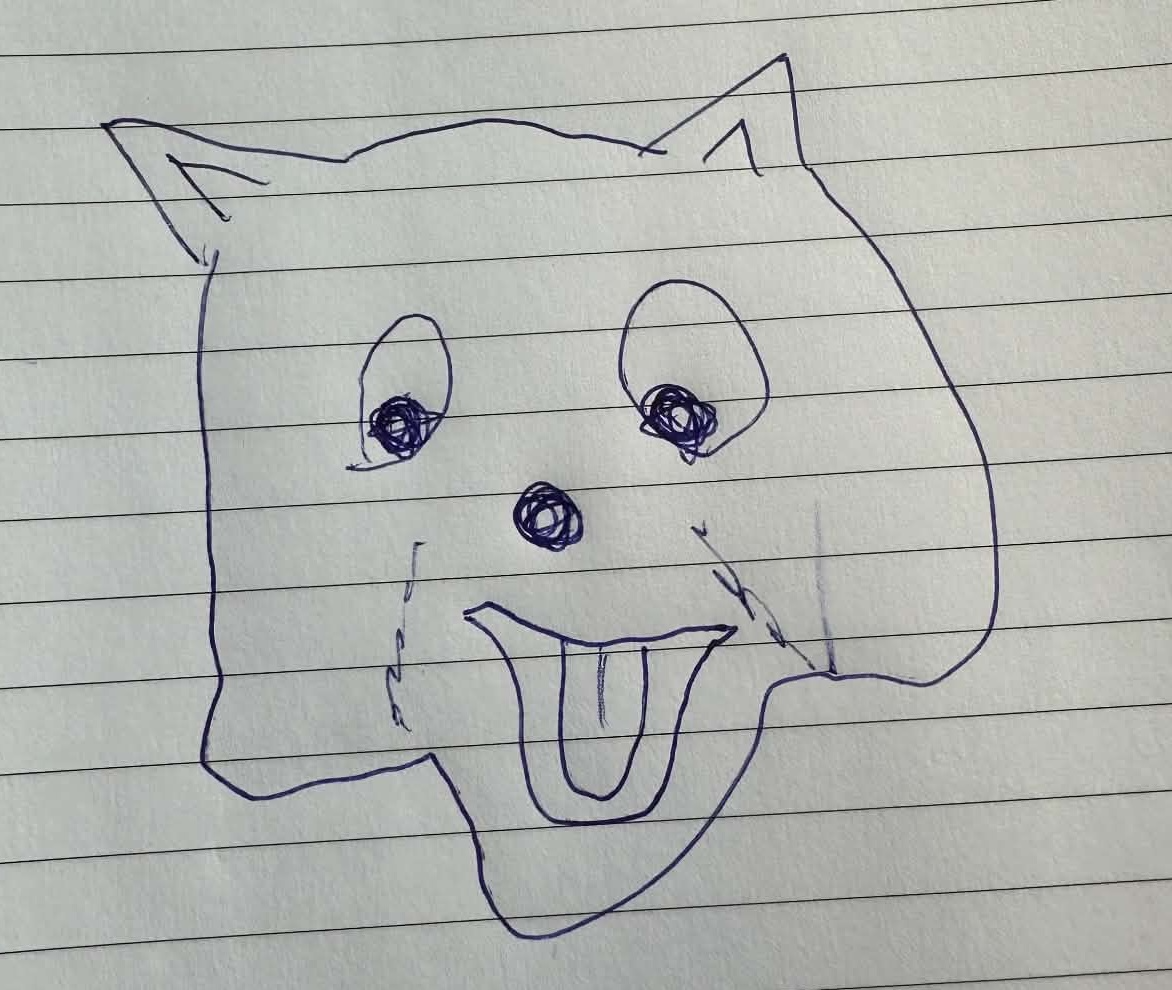
A few lines can describe the shape of the character, the direction of the head, the clothes or some other characteristic we want to keep. The drawing doesn’t have to look particularly impressive. It just needs to explain the idea.
We can then use that drawing as input and let AI turn it into something much closer to the visual style of our avatars.
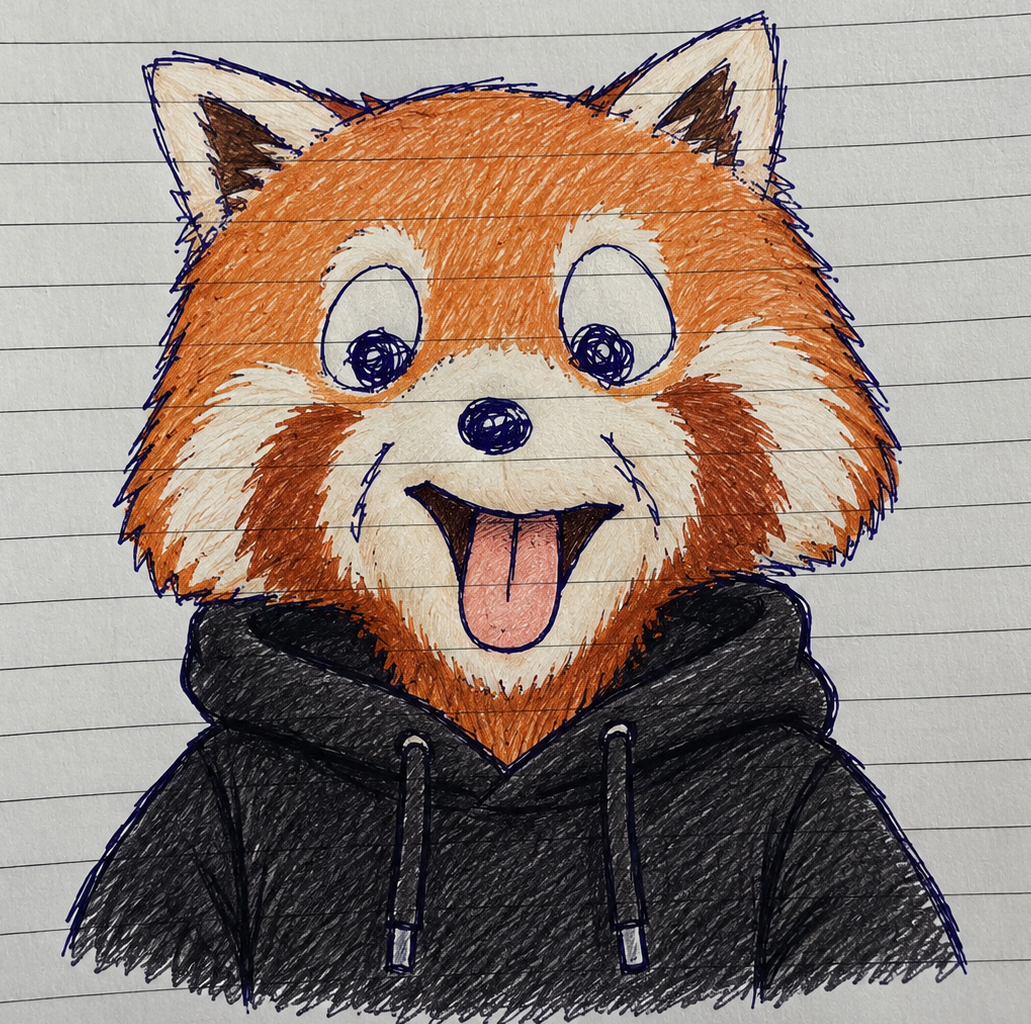
From there, we continue working with it. Maybe the head is wrong. Maybe the expression has changed. Maybe the clothes aren’t quite what we imagined. Or maybe the AI has interpreted one of our very questionable pencil lines in a completely different way than intended.
Then we adjust it and try again.
Do you need to know how to draw?
Well, No!
That is actually one of the things we find interesting about the process. You can make a very rough sketch and still end up with a perfectly usable avatar. AI fills in a lot of the information that isn’t there.
This makes it possible for someone who wouldn’t normally describe themselves as an illustrator to create something that previously might have required much stronger drawing skills.
But that doesn’t mean those skills no longer matter.
Quite the opposite. If you have experience drawing, you can put much more information into the first version.
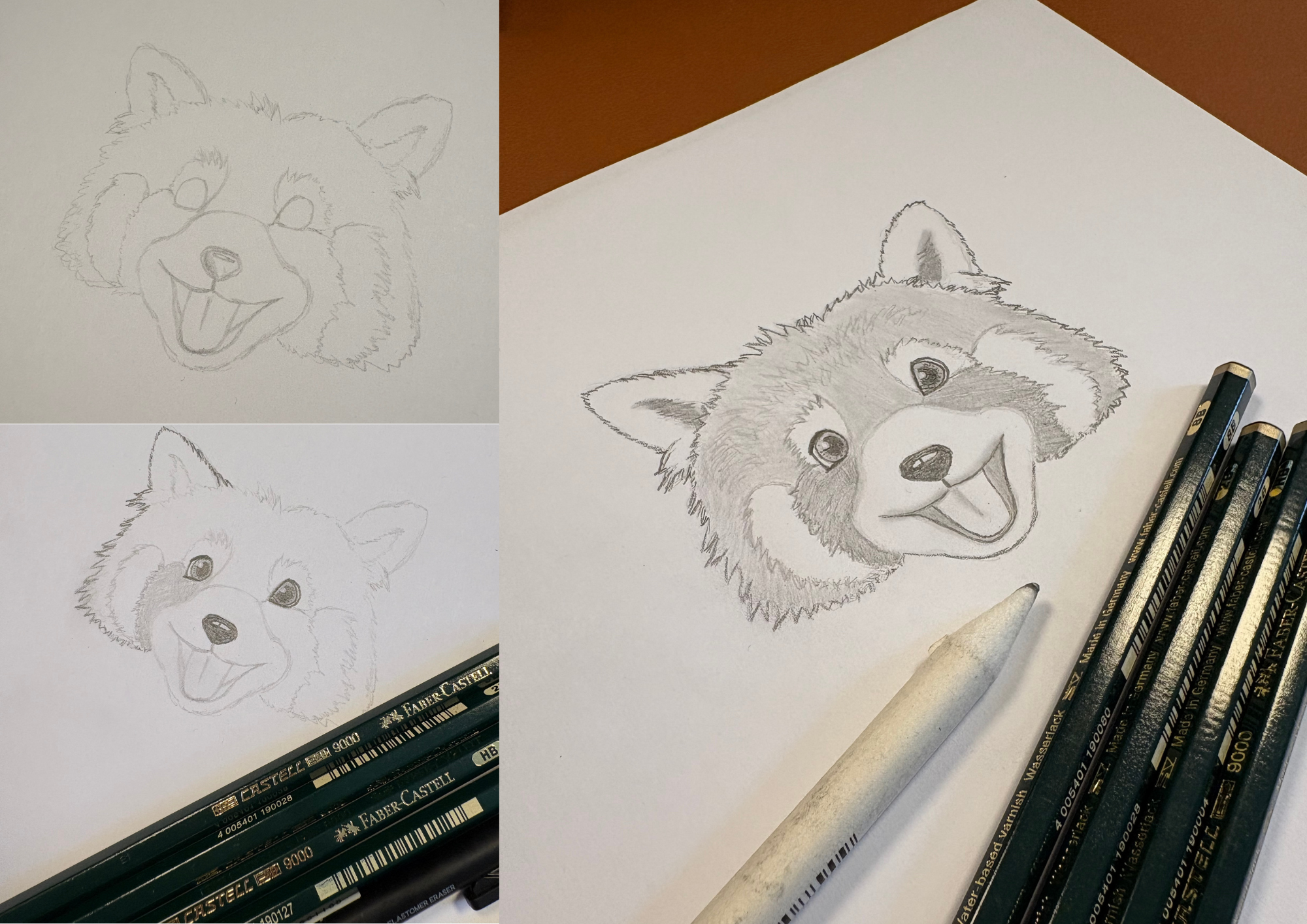
The proportions can already be correct. The expression can be defined. The posture, clothing and smaller characteristics can already be there. When we start from a more detailed drawing like this, the first AI-generated version can sometimes be surprisingly close to the final avatar.
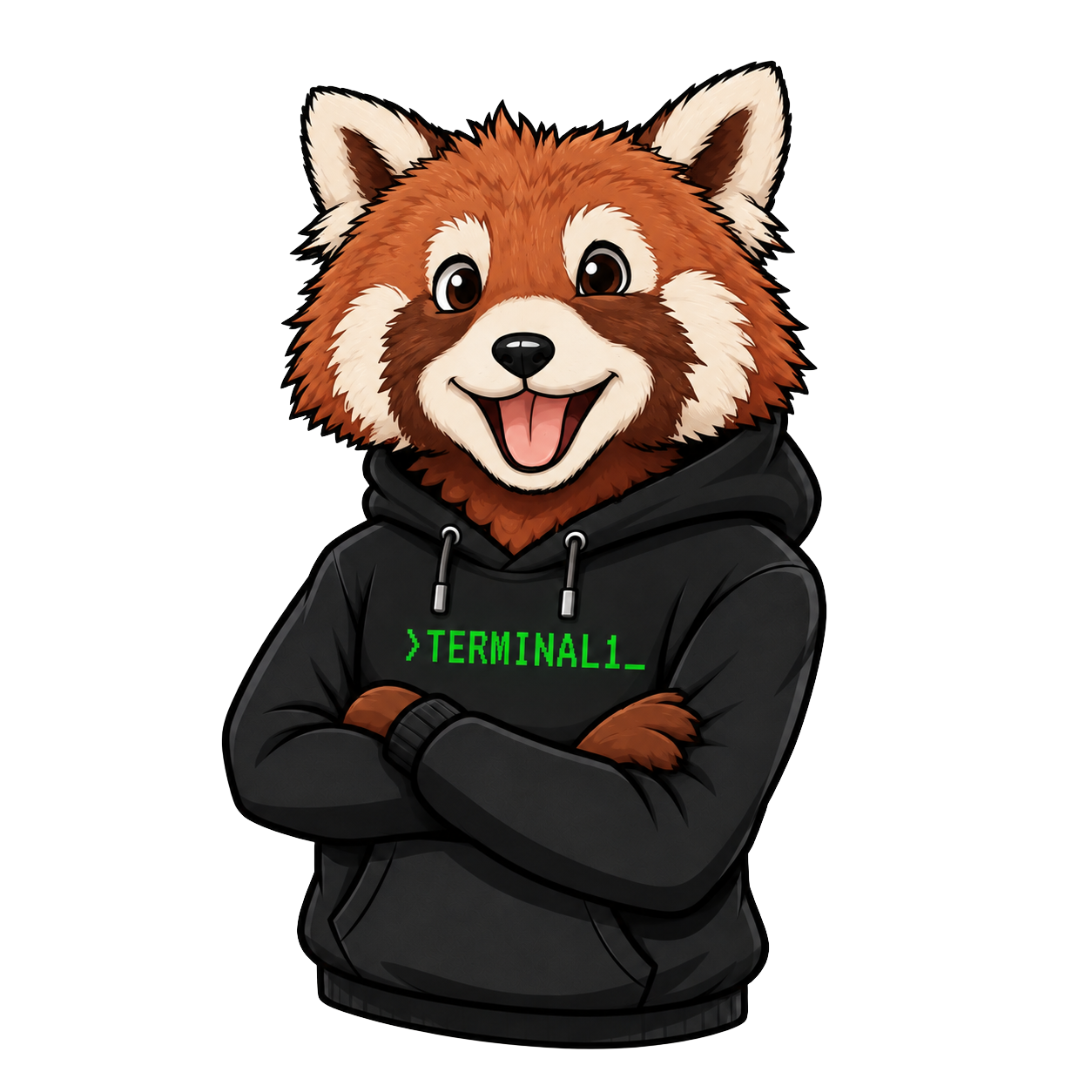
With the simpler sketch, AI has to interpret more. With the detailed drawing, we have already made more of those decisions ourselves.
The fun thing is that both approaches work. They simply give us different levels of control over the starting point.
AI doesn’t remove the craft
This is probably the part of the process we find most interesting. It would be easy to look at the finished avatar and say:
“AI made that.”
And technically, even if AI played a big part in creating it, that description misses quite a lot of what happened before and after the image was generated.
- Someone still had to come up with the idea.
- Someone had to draw the first version.
- Someone had to decide what the character should look like.
And when AI produced something, someone had to decide whether it was good, bad or somewhere in between.
The first generated image is rarely the one we use.
We Generate
    ↓
Look
    ↓
Compare
    ↓
Adjust
    ↓
Generate again
Sometimes the AI creates something unexpected that actually improves the character. Other times it creates something technically impressive that doesn’t look anything like what we wanted.
The tool can create the image but we still have to decide what we want to create.
So where is the craftsmanship?
For us, this is also where the conversation about craftsmanship becomes interesting.
When a new tool makes something easier, it can be tempting to think that the old skill no longer matters. That isn’t necessarily what happens.
- Someone who knows how to draw can use that knowledge to give the AI better information.
- Someone with experience in design will probably notice things that someone without that experience doesn’t.
- Someone who has developed a good eye for detail will still spend far too long adjusting something that most people would never notice.
AI lowers the threshold and gives more people the ability to create things that would previously have been difficult for them to produce.
Surely, that’s a good thing. But knowledge, experience and craftsmanship still influence the result.
They just become part of a slightly different process.
From paper to Terminal1
To summarize, think of it as this:
- A pencil is a tool.
- A camera is a tool.
- Photoshop is a tool.
- Code is a tool.
- Generative AI is a tool.
They are obviously not equivalent. Each changes the process in different ways, and generative AI in particular changes who can create certain things and how quickly ideas can be explored.
A capable tool doesn’t automatically produce good work, it gives you possibilities. What you do with those possibilities still matters.
For our avatars, AI lets us take a drawing that might never have gone any further than a notebook and turn it into something we can actually use.
For someone who doesn’t draw very much, a few rough lines can be enough to begin. For someone with more drawing experience, a detailed illustration can provide much tighter control over where the AI starts.
Both approaches can lead to the same place. They simply take different routes.
And despite all of the technology involved, we like that the process still begins in one of the simplest ways possible: with an idea, a pencil and a piece of paper.
This is part of our “Craftsmanship in the Age of AI” series where we share how we approach software development, architecture and frontend engineering. If you’re building something similar, we also work as software development consultants. Check our Services for more details.